

How much weight can a single rope bear?
How many legends can a century-old factory continue to write?
Less than one-tenth of one percent of manufacturing enterprises nationwide have a history spanning over a century;
in Shandong Province, such centennial manufacturers are few and far between.
Yet in Qingdao, there exists just such an enterprise—
one that has journeyed through a hundred years of history, anchored by a single rope.
That enterprise is Haili.
A century of craftsmanship, an unwavering original mission;
a legacy passed down through generations, building the nation through industry.
The "Haili Story" series of posts continues to unfold. In our previous installment, we witnessed the journey of the State-owned Qingdao Lace Factory as it weathered storms and revitalized its development; tempered by the passage of time, its core spirit of craftsmanship remained steadfast and unchanged.
In this installment, guided by the voice of Rao Chunsheng—a veteran leader who personally witnessed and participated in the entire process of developing and manufacturing Navy cap streamers—let us step back into that era of passionate endeavor and uncover the secrets behind the birth of the Navy cap streamer.
I: An Urgent Mission Amidst the Spring Breeze
It was the spring of 1977. The wind in Qingdao still carried a hint of chill, yet within the courtyard of the State-owned Qingdao Lace Factory, the grass and foliage had already begun to turn a subtle shade of green. It was during this season of budding vitality that a notice from the General Logistics Department shattered the workshops' customary tranquility.
The notice stated clearly: the State-owned Qingdao Lace Factory was tasked with undertaking the production of streamers for the Navy’s sailor caps.
This was not merely a production quota; it was a weighty national mandate.
At that time, the domestic textile industry faced a significant technical bottleneck regarding this seemingly minor accessory—the sailor cap streamer. Domestically produced streamers, printed with gold-colored powder, would fade and lose their luster over time, becoming flimsy in texture and unable to withstand the corrosive effects of sea winds and salty mist. Conversely, while imported materials were exquisite, they were prohibitively expensive and subject to the control of foreign suppliers—rendering it impossible to achieve independent, self-reliant production.
The two streamers fluttering in the breeze behind the brims of Navy sailors' caps were matters of military bearing and discipline—and, even more importantly, matters concerning the image of a great nation. It was imperative to manufacture high-quality streamers that were truly our own—made by Chinese hands.
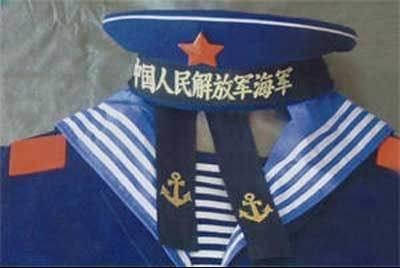
Navy Type 74 Sailor Cap with Gold-Powdered Inscription (Image Source: Internet)
II The "Impossible" Challenge of Millimeter-Precision
The requirements for this mission were exacting to the extreme.
The streamers—the ribbons attached to the cap—had to feature the inscription "People's Liberation Army Navy" and an anchor motif, woven with absolute precision against a jet-black background. Even more challenging was the technical specification: the design had to possess a three-dimensional, raised texture on *both* the front and back sides—akin to the exquisite craftsmanship of "double-sided embroidery"—while maintaining dimensional accuracy down to the very last fraction of a millimeter.
In the field of jacquard weaving at the time, this was considered an almost "impossible mission"; indeed, most domestic manufacturers shied away from the task.
Why, then, did this weighty responsibility fall upon the shoulders of the Qingdao Lace Factory? It was no mere coincidence. Founded in 1922, this venerable factory had spent over half a century deeply immersed in the craft of weaving. Decades of accumulated technical expertise had not only gathered a cohort of highly skilled artisans but had also fostered a deep-seated spirit of "striving for perfection and refusing to admit defeat."
III Nights of Relentless Technical Breakthroughs
For the factory, a mission was a command.
The factory leadership swiftly assembled a specialized technical task force, and from that moment on, the lights in the workshops burned brightly through every single night. This seemingly simple streamer actually concealed a complex technical puzzle. It was woven from an intricate blend of three materials—rayon, natural silk, and mercerized cotton thread—comprising a total of 248 individual threads arranged across the warp and weft, allowing for not a single thread out of place. The golden lettering and anchor motif had to be woven using gold-colored rayon jacquard; the design required both a vivid, three-dimensional appearance and the absolute assurance that the patterns on the front and back sides were perfectly identical.
In an era devoid of advanced automated machinery, every technical parameter had to be painstakingly determined through the manual labor and keen observation of the workers themselves. What were those days like? Technicians stood vigil beside the looms day and night, repeatedly dismantling and fine-tuning the machinery while meticulously scrutinizing every detail of the design blueprints. The tension of the threads, the speed of the weaving process, the precise timing of the jacquard mechanism—every single detail was subjected to hundreds, if not thousands, of trials. The workers’ eyes grew bloodshot from exhaustion, and their palms became calloused and rough from the labor, yet not a single person voiced a complaint.
If the iron anchor motif on a ribbon showed even the slightest single-sided protrusion, or if the weave pattern appeared even marginally uneven, it was immediately unraveled and rewoven. Even a dimensional deviation of a mere one millimeter meant immediate and decisive rejection; under no circumstances was such a piece allowed to proceed to the next stage of production. Every employee held but one ironclad rule in their hearts: this is military-grade equipment, and the baseline for quality is absolutely inviolable.
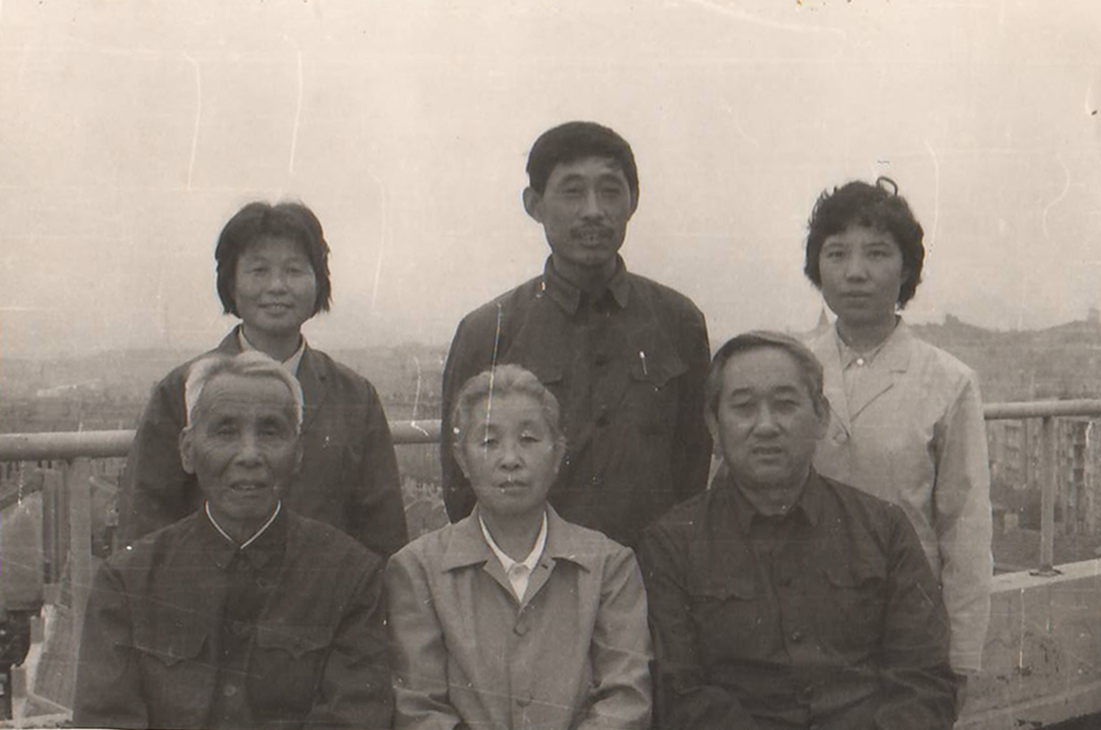
A Group Photograph of the Qingdao Lace Factory Leadership Team, 1977: Front Row—Company Founder Song Yunju (far left), Party Branch Secretary Sun Qinben (center), and Factory Director Liu Enda (far right). Back Row—Then-Party Branch Member Ding Zifeng (far left), Then-Party Branch Member Kou Fujia (center), and Then-Party Branch Member Wang Aifang (far right).
IV: The Glory of a Vast Maritime Frontier
After countless all-night vigils and unyielding perseverance, the very first qualified ribbon was finally woven.
The jet-black body of the ribbon was exquisitely fine and crisp; the golden lettering and the iron anchor motif stood out in bold relief, shimmering brilliantly under the sunlight. The weave patterns on both the front and back surfaces aligned with flawless precision, and its dimensions—147 millimeters in length and 38 millimeters in width—matched the official standards exactly.
When the military representative, having conducted repeated and rigorous inspections, solemnly pronounced the word "Qualified," the quiet workshop erupted in a sustained and thunderous ovation. In that moment, all weariness dissolved into relief, and every sacrifice crystallized into a profound sense of pride.
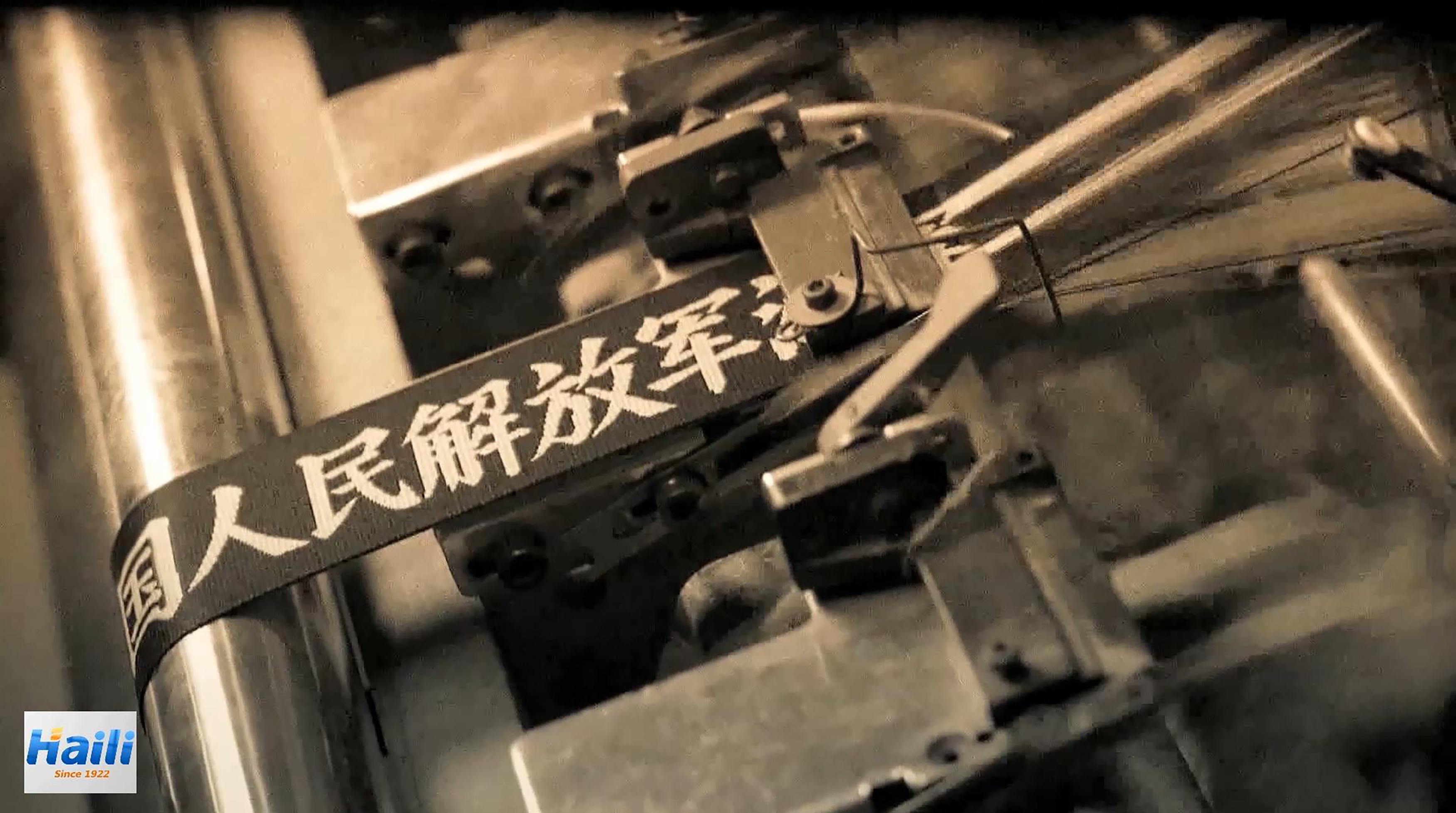
1977: Navy sailor cap ribbons being woven on the looms at the Qingdao Lace Factory.
For more than two decades thereafter, the rows of Jacquard ribbon looms in the workshop never ceased their operation. Ribbon after black ribbon—each one bearing the imprint of the artisans' skill and their unwavering dedication—flowed continuously outward to serve the nation's vast maritime frontiers. Tied to the cap bands of generations of naval sailors, these ribbons sailed across the open oceans alongside warships and stood guard over islands and reefs alongside the troops, becoming the single most iconic symbol of the People's Navy's distinctive image.
This achievement garnered high acclaim and official commendations from both the Equipment Department of the General Logistics Department and the Ministry of Light Industry. This honor belonged to every single employee—to every solitary figure seen working with intense concentration beneath the lamplight. Today, as we once again run our fingers over that ribbon, it feels as though we can still sense the warmth of that spring in 1977—and feel the pulse of a craftsmanship that transcends both time and space.
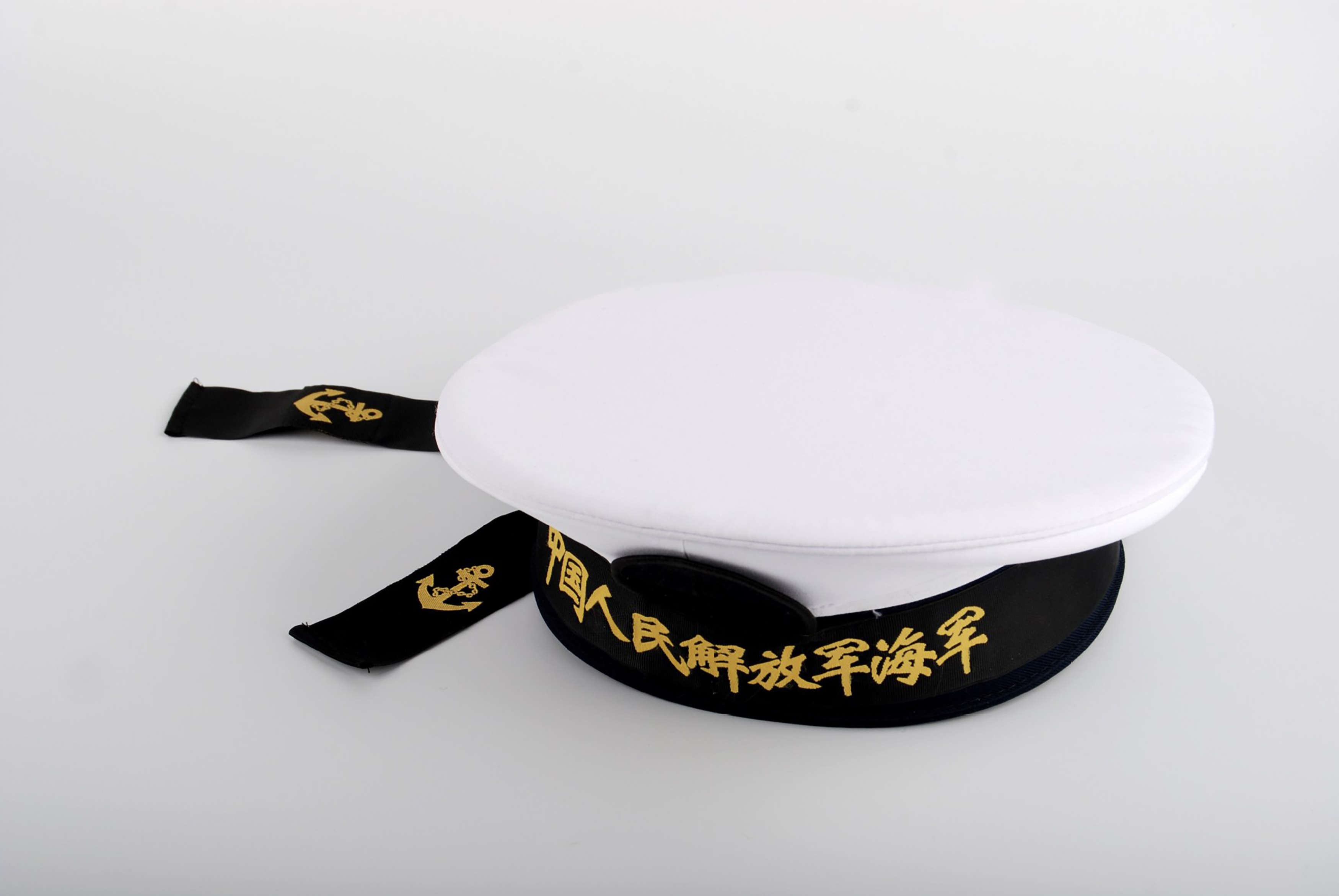
The Cap-Streamer of the PLA Navy
Each individual streamer weaves a tapestry of glory for the defense industry;
every act of steadfast dedication embodies the true spirit of craftsmanship.
While these streamers continue to flutter along our maritime frontiers,
the tides of the era have already turned the page to a new chapter.
In our next installment, let us continue our journey inside the Qingdao Lace Factory to witness how—borne on the spring breezes of this new era—it breaks through challenges to forge new heights of excellence...
Please stay tuned for the next episode of "The Haili Story."