

Sailboat Rope Basics
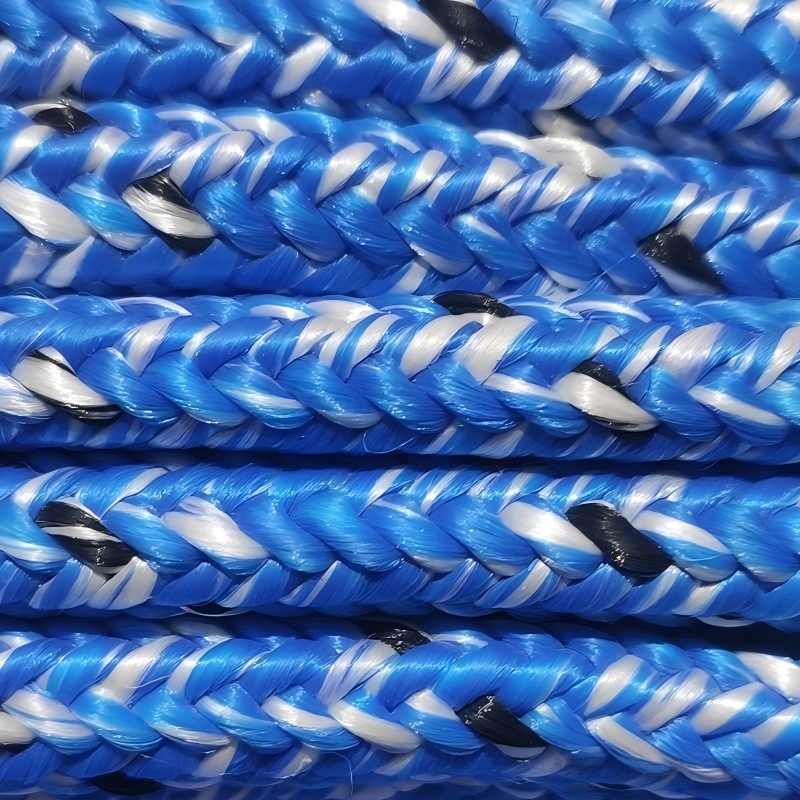
Sailboat ropes can be understood as "the multi-strand ropes used to adjust sails and moor the vessel." They are required to possess properties such as tensile strength, impact resistance, abrasion resistance, flexibility, and light weight. As operations are conducted at sea for long periods with high frequency, and with the phasing out of past common materials like steel wire, hemp, or cotton rope, the advent of synthetic fibers has not only increased their service life but also enhanced safety performance. Most sailing ropes today are made from materials such as nylon, polypropylene, vinylon, and polyester.
General Classification of Sailboat Ropes:
Spinnaker pole lift/uphaul ------ UPHAUL + UPHAUL (2 lines)
Reefing lines ------ REEF 1 + REEF 2 + REEF 3 (3 levels, 1 line per level, total 3 lines)
Headsail halyards ------ STAYSAIL + YANKEE + YANKEE (3 lines)
Mainsail halyard ------ MAINSAIL (1 line)
Mainsail outhaul ------ OUTHAUL (1 line)
Mainsheet ------ M/SHEET (1 line)
Boom topping lift ------ T/LIFT (1 line)
Boom vang ------ VANG (1 line)
Each rope has its fixed purpose. Of course, not all boats will have this many ropes! Before you purchase sailboat ropes, the first thing you need to determine is the boat's intended use — a racing boat or a cruising boat! The choice of rope for these two different uses varies significantly. First, ropes for racing boats are much more expensive than those for cruising boats. Second, ropes for racing boats are also lighter, designed to reduce the boat's weight and achieve higher speeds!
Synthetic fiber ropes offer advantages such as light specific gravity, high strength, good impact resistance and abrasion resistance, as well as resistance to corrosion, mildew, and insects. For example, the strength and abrasion resistance of nylon ropes are several times higher than those of hemp or cotton ropes. Polypropylene ropes have a specific gravity less than water, allowing them to float, making them convenient and safe to handle.
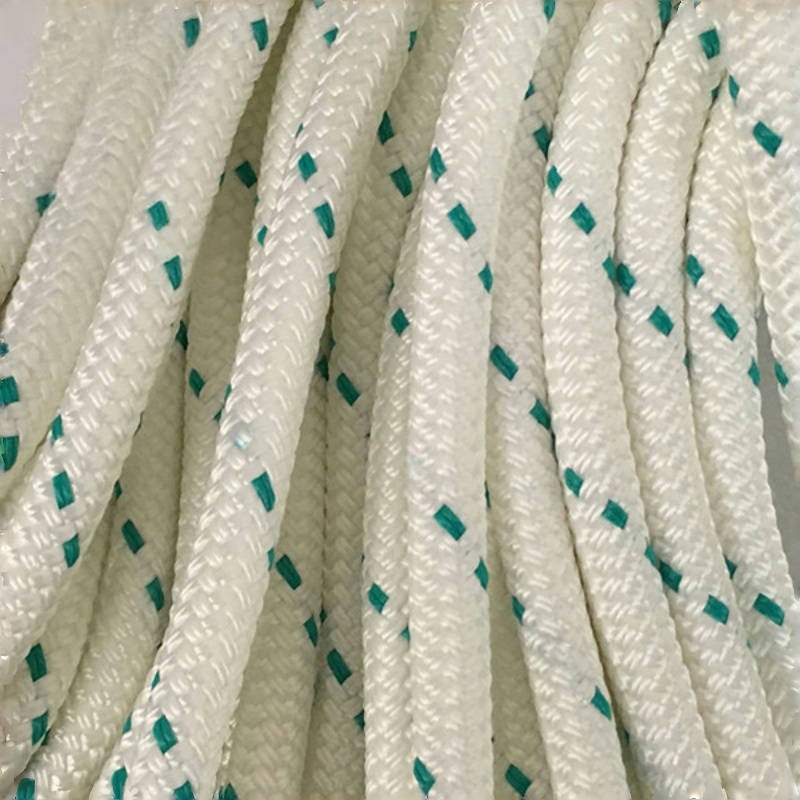
Among the synthetic fibers mentioned above, a common material used in halyards is "UHMWPE (Ultra-High Molecular Weight Polyethylene) core + polyester cover." For racing boats, "UHMWPE core + polyester blended with aramid cover" is often chosen, as the latter is lighter and more abrasion-resistant.
After selecting the material, you need to choose the size of the sailing rope. Each type of rope has a corresponding size, which refers to its thickness. The thickness mainly varies depending on the size of the boat.
Once you have chosen the material and size, you should know how many meters of sailing rope you need! Generally, the length of the halyard is related to the mast height. How do you determine the length of sailboat ropes? Please refer to these simple guidelines.
Halyard: Mast height + forestay + distance to winch + 25cm;
Jib sheet: 1.5 times the hull length;
Mainsheet: The best way to measure is to remove the existing mainsheet and measure its length;
Spinnaker sheet: 2 times the hull length + 10cm (for 2 eyesplices).
One point worth noting is that the placement of winches and other fittings may affect the rope length. It is recommended that before purchasing, you ask the captain to roughly measure the original rope length, as this will facilitate your subsequent choices.
Every sailboat rope has its own destiny — where it is applied, what construction method is used, its elongation characteristics, etc., all influence the connection between the rope and the boat. With so many ropes on a boat, how do you distinguish them? And how do you express your care for them? As mentioned at the beginning of the article, you can label each rope on a rope clutch, but this may not look very aesthetically pleasing! For those who sail frequently, they have their own unique ways to identify a rope's purpose. The most basic method we discuss here is to distinguish uses by color!
Mainsheet/Mainsail Halyard: White
Jib/Spinnaker: Blue
Yankee/Staysail: Red, Control lines: Green
Kicker/Traveler: Black
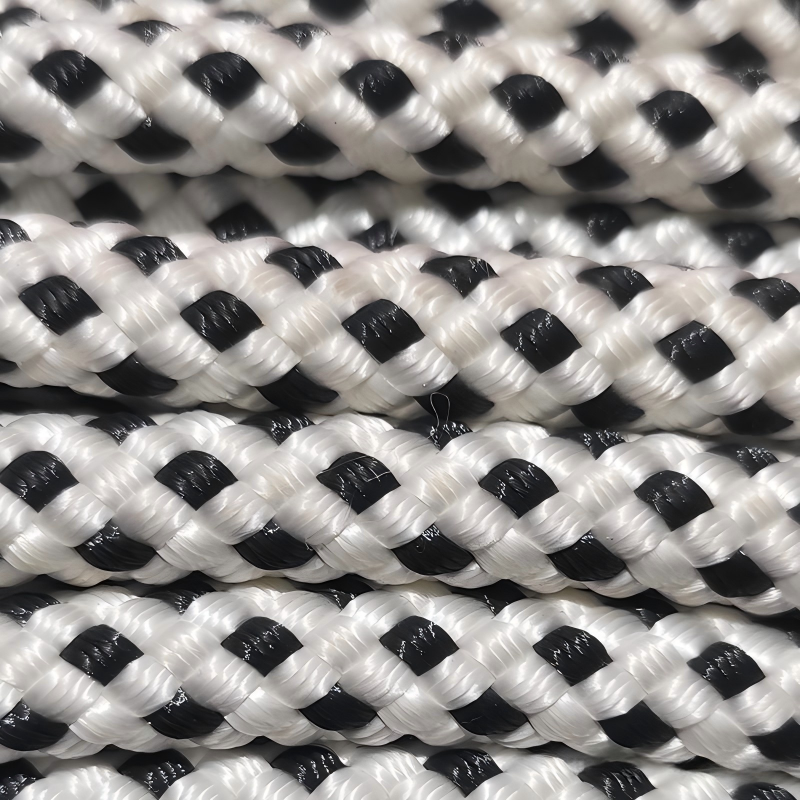
Sailboat Rope Basics
For your own boat, you can choose whatever color sailing rope you prefer. However, make sure not to confuse anyone coming on board! Try to avoid overly complex colors; creating a dazzling rainbow effect is generally unnecessary and not advisable.
A good boat deserves good sails, and certainly good ropes. However, if you choose high-quality, high-end ropes but fail to maintain them properly, it's an injustice to any expensive purchase. Therefore, remember to take good care of your ropes. After replacing your sailboat ropes with new ones, how should you maintain them in the future? Let's take a look together!
When not in use, coil your ropes and avoid exposing them to intense heat and direct sunlight! If the ropes on your sailboat are still the stiff type with steel wire construction, it is recommended that you replace them with softer ropes, which are easier to knot and reduce the risk of injury.
After returning from sailing, wash the ropes and dry them in a well-ventilated area, avoiding direct sunlight. The purpose of this is to prevent seawater from penetrating the rope, which can cause corrosion.
Avoid stepping on ropes with the soles of your shoes. Shoe soles often contain sand particles that can easily penetrate the rope's cover and damage the internal fiber structure when the rope is under load, potentially leading to rope failure.
Ropes generally need to be replaced every 1-2 years, although this also depends on their frequency of use.
Before use, apply a specialized protective coating to the rope if conditions permit, to extend its service life.
Captains should frequently inspect the rope at sheaves (pulleys) and the attachment points of the furler. If rope aging is detected, replace it promptly to avoid accidents.
Keep the rope cover away from sharp objects. The cover acts like a protective layer, helping to minimize aging and damage. Once the rope cover is compromised, your rope becomes very vulnerable! If you notice problems with the cover, remember to address them promptly.
For many sailboat captains and sailors, they need more patience than motor yacht captains. The equipment on a sailboat is different from that on a motor yacht. A reminder to all boat owners, captains, and sailors: Paying close attention is the key to ensuring your boat remains in the best possible condition!