

1. Structural Differences
Round Rope (e.g., climbing/static rope)
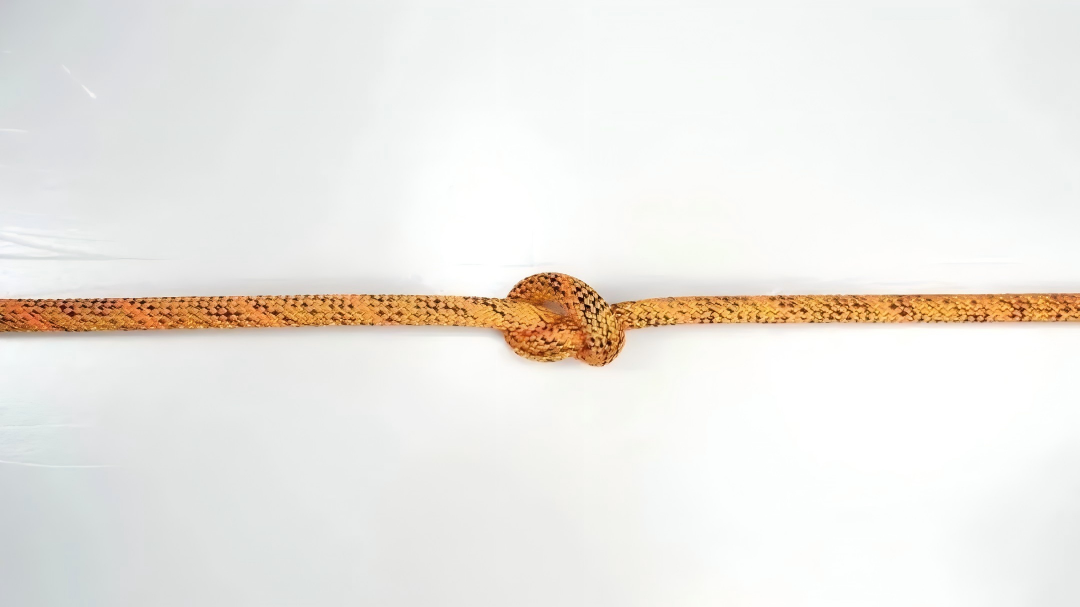
Typically features a kernmantle (core-sheath) structure.
Inner core: parallel or twisted load-bearing fibers (carry ~70% of strength).
Outer sheath: tightly braided protective layer.
Cross-section is nearly circular, with multi-layered, three-dimensional fiber interlacing.
Good elasticity (especially nylon), allowing load distribution.
Webbing (sling/running webbing)
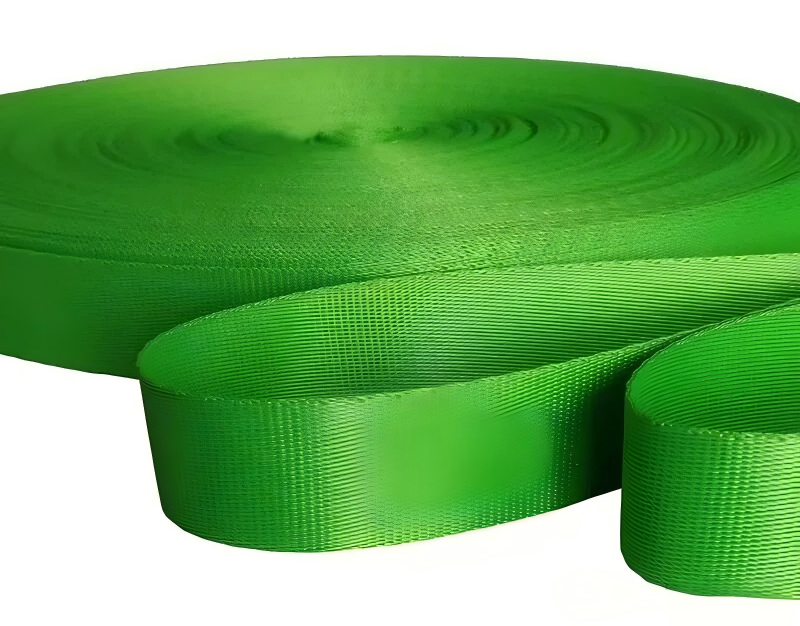
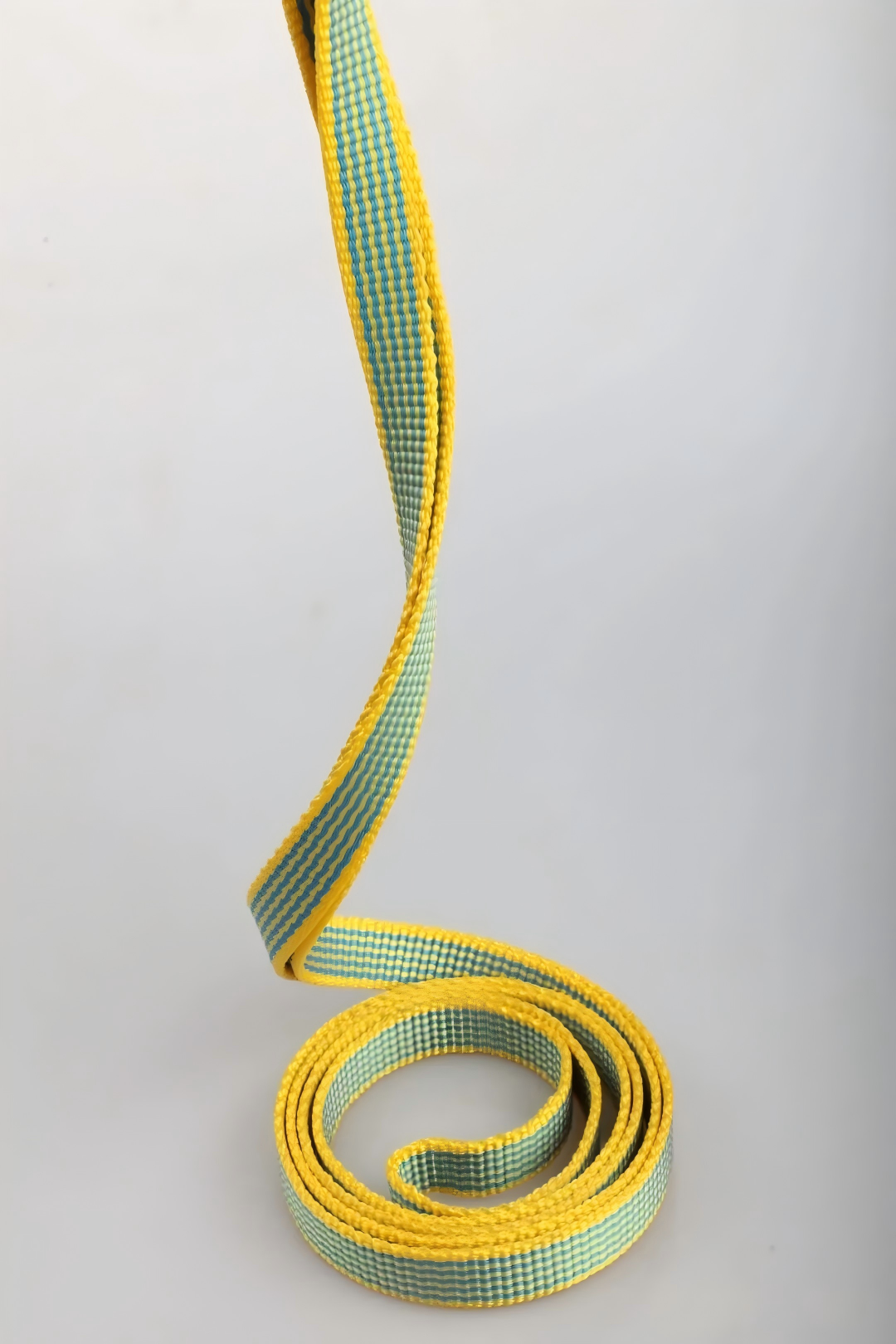
A flat, two-dimensional fabric.
Multiple layers of warp and weft yarns woven flat — no distinct core or sheath.
Cross-section is a thin rectangle, with fibers stacked in a single plane.
2. Key Differences During Knotting — Why Webbing Suffers More
2.1 Extremely Small Bending Radius → Sharp Stress Increase
Round rope: After knotting, it maintains a relatively round curvature. Fibers bend in layers, dispersing stress.
Webbing: Forced into sharp angles / small-radius bends. Outer fibers are over-stretched, inner fibers severely compressed. Stress concentrates at the narrow edges of the webbing.
2.2 Highly Uneven Fiber Loading
Round rope: The 3D structure allows tension to transfer and balance progressively across layers. High-elasticity fibers buffer stress peaks.
Webbing: Flat yarns slip and rub against each other inside the knot. Only a few fibers bear most of the load — and they break quickly.
2.3 More Severe Compression and Shearing
Webbing is flattened even more and squeezed tighter inside the knot, causing strong friction, shearing, and even melting (especially with Dyneema/Spectra).
Round rope has a full cross-section, distributing compression more evenly with less friction.
2.4 Poor Elongation Worsens Damage
Nylon round rope: Elongation of 10%–30%. Stretches to absorb energy and equalize load.
-
Webbing (especially high-strength, low-elongation types): Low stretch, brittle behavior. Stress peaks cannot be absorbed by elongation, leading directly to fiber breakage.
3. Strength Loss Data — Direct Comparison
| Knot Type | Strength Retention | Strength Loss |
|---|---|---|
| Round rope (any knot) | 60%–80% | 20%–40% |
| Nylon webbing (water knot / overhand) | 45%–60% | 40%–55% |
| Dyneema/Spectra webbing | 30%–45% | 55%–70% |
4. One-Sentence Summary
A round rope is a 3D, elastic, stress-dispersing structure; webbing is a flat, low-elongation, stress-concentrating ribbon. Once knotted, webbing turns into a stress-riser strip — so its strength drops much more.
About Haili Group
Haili Group is a century-old Chinese enterprise specializing in high-performance ropes, safety equipment, and technical training for high-altitude operations. With a strong commitment to safety and innovation, Hailiya supports professionals in wind power, construction, rescue, offshore industries, and outdoor sports — both in China and globally.
Contact Information:
Qingdao Haili Group Co.,Ltd
Qingdao Huakai Ocean Science and Technology Co.,Ltd
web: www.huakai-rope.com
email: info@huakai-rope.com